
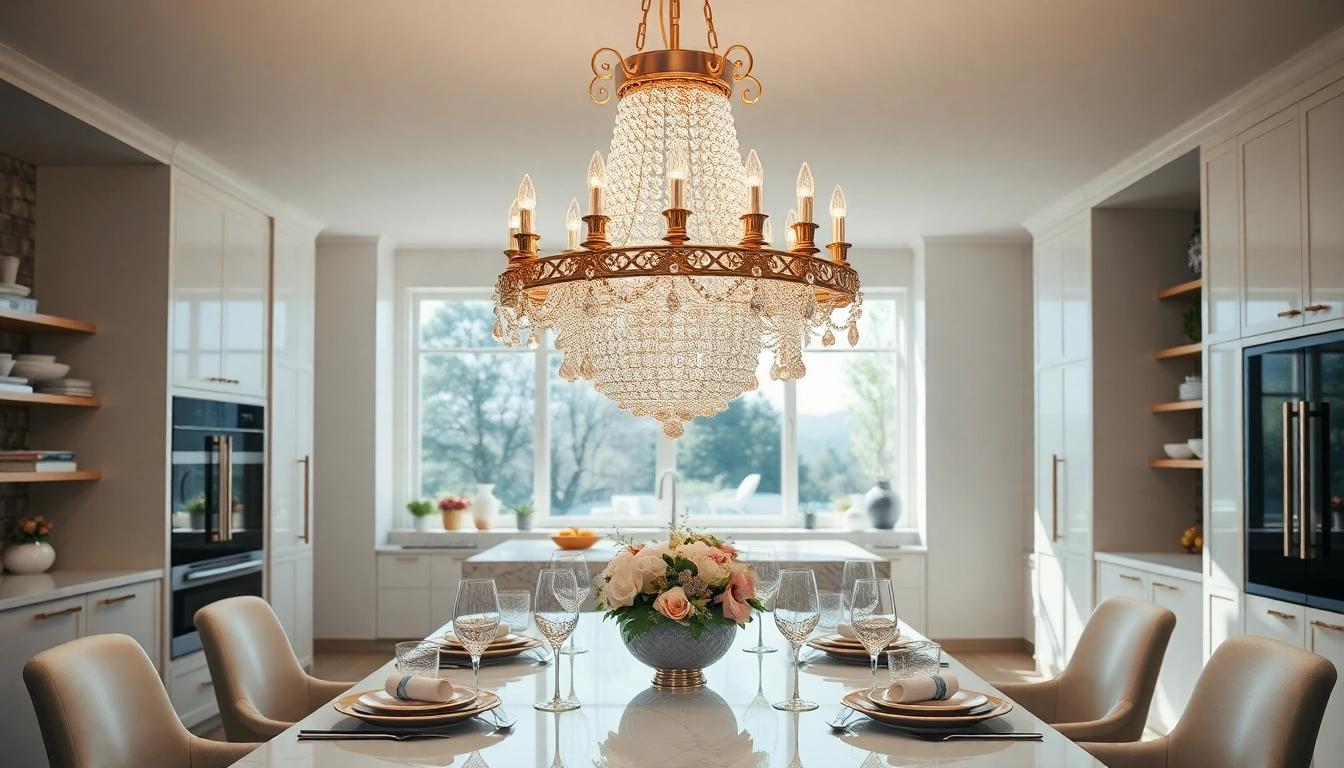
Introduction to the Island Chandelier
An island chandelier serves as both a fixture and a focal point in kitchen and dining environments. These elegant lighting solutions are perfect for adding a touch of sophistication to spaces where food and conversation converge. Rather than just illuminating a room, the right island chandelier can enhance the overall aesthetic, bridging the gap between function and style.
What is an Island Chandelier?
An island chandelier is a suspended light fixture that is designed specifically for positioning over kitchen islands, dining tables, or countertops. Unlike typical chandeliers that may be more ornate or suited for living rooms, island chandeliers are generally longer in shape, allowing them to provide ample light across wider surfaces. These fixtures come in various styles, sizes, and designs, making them versatile additions to a variety of interior decors.
Common Materials Used in Island Chandeliers
Materials play a critical role in defining the look and feel of an island chandelier. Here are the most common materials used:
- Metal: Often made from brass, stainless steel, or wrought iron, metal fixtures offer durability and a modern aesthetic.
- Glass: Glass elements, whether clear, frosted, or colored, provide diffusion of light and can add elegance.
- Wood: For a rustic touch, wooden components can introduce warmth and texture, especially in farmhouse designs.
- Crystal: This material brings an element of luxury and can enhance the ambiance with refracted light.
Why Choose an Island Chandelier?
Choosing an island chandelier offers numerous benefits. They not only provide sufficient lighting for tasks such as food preparation or dining but also contribute significantly to the overall decor of the room. With the right island chandelier, you can:
- Enhance the ambiance: The unique style of an island chandelier can set the tone of your space, making it feel more inviting.
- Complement your design: They come in various styles to match contemporary, classic, or rustic interiors.
- Increase property value: Well-chosen lighting fixtures can enhance marketability and perceived value.
Design Considerations for Your Island Chandelier
Choosing the Right Size
When selecting an island chandelier, size is paramount. Typically, a chandelier should be roughly one-half to two-thirds the width of the island it rests above. Measuring the space is crucial; an overly large fixture can overwhelm a room, while a small chandelier may fall flat in terms of visual impact. Additionally, consider the height of the ceiling. For higher ceilings, a larger chandelier with multiple tiers may create a better balance.
Color Schemes and Styles
Color schemes dictate the overall character of the chandelier and its compatibility with the surrounding decor. Neutral colors like white, silver, or black tend to fit a variety of decors, while bolder hues can act as statement pieces. Consider your kitchen or dining area’s existing color palette to ensure that the chandelier complements rather than contrasts. Furthermore, popular styles include:
- Industrial: Often characterized by metal finishes and simple lines, these fixtures add an urban edge.
- Transitional: A blend of traditional and contemporary elements, these fixtures are versatile and adaptable.
- Vintage: Featuring ornate details, vintage chandeliers contribute a nostalgic charm.
Placement Tips to Enhance Aesthetics
The positioning of your island chandelier can significantly alter the room’s dynamics. Ideally, the bottom of the chandelier should hang between 28 to 34 inches above the surface of the island for optimal illumination without obstructing views. Additionally, centralizing the chandelier directly above the island not only provides balanced light but also enhances the room’s dimensions. For long islands, considering multiple smaller chandeliers can also create a sophisticated layered effect.
Installation and Maintenance Tips
Professional vs. DIY Installation
Deciding between professional installation and a DIY approach can depend on your skill level and the complexity of the chandelier. For those comfortable with electrical work and familiar with local code regulations, a DIY installation can save costs. However, if you are dealing with a heavy fixture or complicated wiring, hiring a professional is advisable for safety and to avoid damaging the chandelier.
Regular Maintenance for Longevity
To keep your island chandelier looking pristine, regular maintenance is essential. Dust the fixture at least once a month using a soft cloth or a feather duster to prevent grime build-up. Additionally, periodically check the bulbs to ensure that none are burnt out. For more complex fixtures with intricate designs or glass elements, consider professional cleaning to avoid damage.
Safety Tips During Installation
Ensuring a safe installation is non-negotiable. Here are some safety tips to follow:
- Always turn off the power at the circuit breaker before starting.
- Use a sturdy ladder and ensure it is positioned safely.
- Have an assistant on hand to help manage the chandelier during installation.
- Consult your chandelier’s manual for specific installation instructions related to your model.
Popular Styles of Island Chandeliers
Modern and Contemporary Designs
Modern chandeliers often prioritize simplicity and functionality. These designs typically feature minimalistic aesthetics with geometric shapes and streamlined forms. Common materials include metals and clear glass. Elements like exposed bulbs and Edison-style lighting enhance the contemporary feel and are favored in urban settings.
Rustic and Farmhouse Inspirations
For those drawn to rustic charm, farmhouse-style island chandeliers often incorporate natural wood and wrought iron with warm finishes. These fixtures can feature intricate designs or be more simplistic, embodying a cozy, laid-back vibe that complements rustic kitchens perfectly. Look for fixtures with an aged patina or weathered finishes for an authentic feel.
Classic and Vintage Options
Classic chandeliers frequently incorporate ornate details, such as crystal embellishments and intricate metalwork. They are characterized by traditional elegance that lends a timeless quality to any space. Vintage styles often revive designs from earlier eras, including Victorian or Art Deco, with unique details that tell a story.
FAQs About Island Chandeliers
What is the ideal height for an island chandelier?
Ideally, an island chandelier should hang 28 to 34 inches above the countertop. This ensures ample light without obstructing views.
How do I choose the right bulb for my chandelier?
Select bulbs based on the chandelier’s style and energy efficiency. LED bulbs are popular for their longevity and energy savings.
Are island chandeliers energy efficient?
Yes, many modern chandeliers are designed to accommodate energy-efficient bulbs like LEDs, providing significant savings over time.
What maintenance is required for chandeliers?
Regular dusting, checking bulbs, and periodic professional cleaning are key to maintaining the chandelier’s appearance and functionality.
Can I install an island chandelier myself?
Yes, as long as you’re comfortable with electrical work and local regulations. For complex designs, professional installation is recommended.